


Higher Everyday Living Fees are one of the most talked-about topics in aged care right now. But behind the policy debates and financial modelling, providers are making real decisions — about culture, operations, residents, and risk.
At our recent webinar, we heard directly from two leaders navigating those decisions. Their perspectives were candid, considered, and often surprising. Here's what stood out.
There's no single right answer — and that's okay
One of the clearest messages from the panel was that HELF isn't a one-size-fits-all proposition. Our panellists have decided, for now, not to offer it at all. And both had well-reasoned, thoughtful explanations for why.
Paul O'Mahony, CFO of For Purpose Aged Care, was direct about his organisation's decision:
"The investment in a resource to manage it, as well as software to track it and training to deploy to the staff — the additional incremental investment versus the outcomes and the value misalignment and purpose misalignment wasn't worth it."
For Paul, it wasn't just a financial calculation. It was a values one.

Graydn Spinks, COO of Capecare, took a different but equally considered approach — applying different strategies across two co-located sites based on their age, asset quality, and resident demographics. Their newer premium build in Dunsborough incorporates services into the room price. Their older Busselton site is exploring tiered offerings.
"What we want to offer has to be authentic and provide value at the same time."
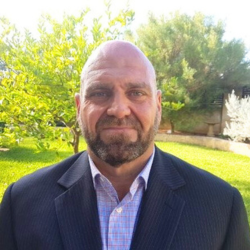
That word ‘authentic’ kept coming up throughout the conversation.
The two-tier problem is real
Perhaps the most consistent theme across all three panellists was the challenge of creating a two-tier experience within a single home: those paying for extras, and those who aren't.
Paul described it plainly:
"We would create a two-tier society within the home where you have the haves and have nots. You're giving a glass of wine to someone and someone next to them, you're not. We felt that that was probably indefensible for us as an organisation."
Graydn echoed this concern — noting that as a community provider in the Cape region, Capecare is the only local option for many residents. The reputational stakes are high.
"We are the only local provider in the Cape region. We've got a reputation to uphold and what we offer has to be authentic."
This tension — between offering genuine choice and inadvertently creating inequality — is something every provider considering HELF needs to think through carefully.
Operational complexity is the elephant in the room
The webinar poll results showed 51% of respondents identified operational complexity as their biggest concern with HELF. The panellists confirmed this is well-founded.

For Capecare, one of the core challenges was that they'd never previously offered additional services — meaning many of the things that could qualify as HELF (Wi-Fi, TVs, menu options) had simply been included all along.
"We've been providing a lot of services that would qualify for additional services or HELF over the years. So that in itself provided a few challenges — how do you sell this new offering given that you've been providing some of it all along?"
For Paul, the opt-out mechanism was a particular sticking point:
"You could do all this big investment in what you're going to deliver, but residents can choose to opt out as soon as they get into the home. Not being able to enforce it as a mandatory undertaking on admission is tricky."
Staff culture was another dimension. Graydn noted that the success of any HELF model ultimately depends on how staff understand and believe in it:
"There's a whole cultural aspect to it — not only for the existing and potential new residents and their families, but certainly the staff. Staff are key in the success of HELF in terms of that value proposition, as opposed to an exercise just to drive additional operational revenue."
What consumers actually want — and it might surprise you
Kevin McCreton from Catalyst Research brought a rich consumer perspective, drawn from surveys of more than 10,000 respondents across Australia.
The headline finding: 60% of consumers are open to a HELF package. But how they think about it varies significantly depending on who they are.
"People who are already in the homes tended to go for comfort factors — what will make my life more comfortable now. Whereas shoppers — the boomers — are a bit more aspirational in terms of what dad or mum might like. Barista coffee versus instant coffee, that kind of thing."
This distinction matters enormously for how providers design and communicate their packages. The person moving in and the family member choosing the home may have very different priorities — and both need to be served.
Kevin was also clear-eyed about where the sector is heading as the baby boomer cohort comes through:
"People like us have grown up with so much choice. Choice has exploded. Convenience has exploded. We expect a lot. A lot of Gen Xs and boomers are used to choice and have very high expectations."
The practical implication? HELF packages that might feel generous today may feel standard within a decade.

Research before you leap
Kevin's core recommendation — before any provider commits to a HELF model — was to do the groundwork first. And not just general market research, but site-specific research.
"Each site has its own idiosyncrasies in terms of the asset you're presenting, the image, the segment you're dealing with, and who you want to attract."
His suggested approach: develop two or three package levels (Standard, Silver, Gold), test them on a limited group, and establish clear protocols for how and when HELF is discussed with residents and families.
Critically, he emphasised that communication needs to work for both those who adopt and those who don't:
"Every communication should be a positive — the opportunity for choice, the opportunity for extras, for comfort, a better lifestyle — versus what you'd be telling non-adopters: our standard offer still meets your needs without compromising on the standard of care we're offering."
What about those not offering HELF? Room pricing is the lever.
For providers who have decided against HELF — or are still on the fence — Paul flagged that room pricing becomes the primary strategic tool. For Purpose Aged Care has increased RAD pricing several times in the past 12–18 months and is watching closely for outcomes from the government's accommodation review due in May.
"We are going to have to expand what we're doing to generate revenue. I just don't think for us HELF is the right strategy."
He was also candid about the uncertainty ahead:
"Never say never. We probably have to keep a close eye on the next couple of rounds of funding indexation and what comes out of the May budget. They're probably the key milestones for us."
What the data says about where you sit
The panel discussion doesn't happen in a vacuum — and our own data helps explain why providers are landing in such different places. Tyler Fisher, our Head of Data and Insights, presented sector-wide analysis at the same webinar showing that the industry naturally clusters into three distinct pricing segments: economy (under $400K), mid-market ($400K–$750K), and premium (above $750K). And crucially, the right HELF strategy — or the decision not to offer one — looks different in each.

For mid-market providers like many of those in our audience, Tyler's analysis shows the margin squeeze is real. These homes spend just as much on hotel services as lower-priced peers, but recover only marginally more revenue. That's precisely the gap a well-designed HELF offering can address. For premium providers, it's less about financial rescue and more about service coherence. And for those choosing not to offer HELF at all, room pricing — as Paul pointed out — remains the most powerful lever available.
The numbers ground the conversation. But as the panel made clear, the numbers are only part of it.
For a deeper dive into the data — including the three-tier pricing model, expenditure benchmarks, and the $650K inflection point — read Tyler's companion piece: What the Data Tells Us About HELF.
The bottom line
What struck us most about this panel was the genuine thoughtfulness with which each leader had approached the decision. Nobody was chasing a quick revenue fix. Everyone was asking harder questions: What does our resident cohort actually value? What can our staff authentically deliver? What fits our culture and our community?
HELF, done well, is a product design challenge — not a fee migration exercise. The providers who get that right will be the ones who thrive.
Whether you're diving in, holding back, or somewhere in between — the conversation is just getting started.
Want to understand how your room pricing compares to the market? Our Accommodation Pricing Report offers insights tailored to your organisation. Request yours here.
Our next webinar — The New Regulatory Model: Working with the ACQSC — is coming up in late April. Register now.